
Tracing Former Raleigh Property Owners
Tracing past owners of land in Raleigh County starts with the deed chain, not with a current tax bill or mailing label. The process is simple. Take the newest recorded instrument, note the grantee and the prior reference it cites. Then step backward grantor by grantor. Raleigh County property records held by the Clerk reach back to the county's formation, though the online index has an unstated cutoff. When a search stalls, a deed book, microfilm roll, plat, or archive request can fill the gap. Keep the legal description attached to every transfer. That way, names from a neighboring parcel never sneak into your chain.
| Source | Years It Covers | Where Held | What It Shows |
|---|---|---|---|
| Latest deed located | Use the recording date printed on the instrument | Raleigh County Clerk | Current grantee, grantor, legal description, and prior reference |
| Earlier deed in the chain | Record the date from each retrieved deed | Clerk index or deed book | Prior grantee and the party who conveyed to them |
| Older volume or microfilm | Online span not confirmed | Ask the Record Room | Earlier transfer where web search does not reach |
| Recorded plat | Use the plat’s own date and book reference | Clerk plat/map category | Lot, block, subdivision, and boundary references |
Start with the newest deed naming the current grantee. Its cited prior instrument is your next stop, long before any broad name search. An older deed book or microfilm index may still exist at the Clerk's office even when the web returns nothing. Remember, a Raleigh record dating to 1850 does not mean an 1850 image is online.
Use Raleigh Prior Instrument References
A prior reference inside a Raleigh deed saves real time. It also keeps common surnames from tangling together. Copy the book and page or document number exactly, then request the earlier instrument. If the reference is missing, search by party name and legal description together. Old parcels can carry a different map or district key today, so the current street label alone will not carry the chain.
- Find the latest deed and mark its grantee, grantor, date, and land description.
- Follow the cited prior instrument, or search the current grantee’s name for the acquisition deed.
- Confirm the earlier parcel description matches the same tract or lot.
- Record each link before moving to an older owner.
- Ask the Clerk for books or microfilm if the web index does not cover the needed year.
- Grantor / grantee
- Conveying party / receiving party named in the instrument.
- Chain of title
- The sequence of recorded transfers for a parcel.
- Legal description
- The deed text used to identify land when an address changed.
How Far Back Raleigh County Ownership Records Go
Raleigh County's deed record run reaches to its 1850 formation. The online search and imaging cutoff is not published in official material. Confirm with the Clerk where the web chain stops. No courthouse fire, flood, WPA indexing project, or deed-record loss appears in Raleigh's history. Treat the chain as intact unless a record proves otherwise.
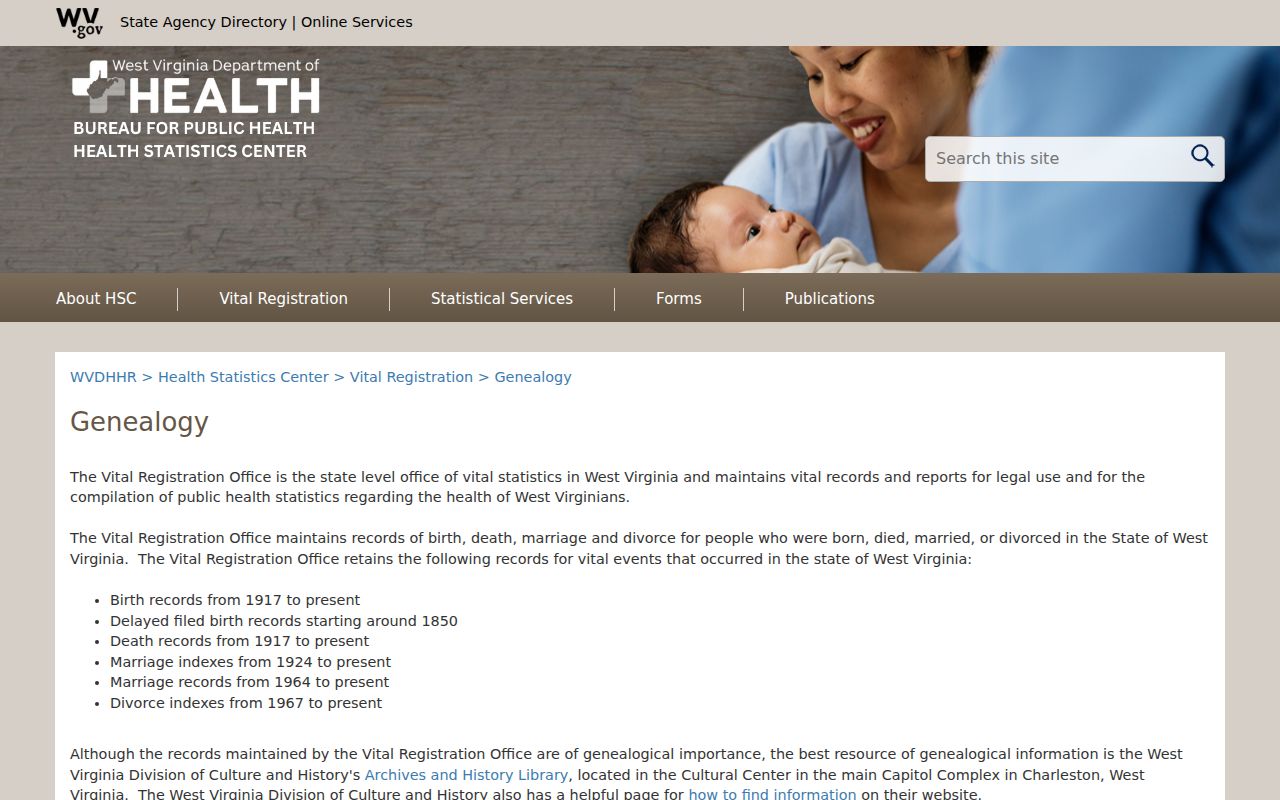
Family historians and court researchers can also turn to the state Archives and History Library. Its genealogy holdings cover county court records and census materials. They also hold military files, naturalization papers, newspapers, and older vital records. Those collections can explain a name or an estate event. Recorded land transfers, though, still live in the Clerk's book and page. Check the legal description there too.
The state's genealogy page lays out the archive's holdings and coverage. Review West Virginia genealogy collections for background work. Keep in mind they never replace an official deed copy.
Old deeds and plats can point you toward past owners of record in Raleigh County. Verify each land transfer with the County Clerk before relying on it.
Lawful use. Former-owner research can support house history, estate work, and property diligence. Do not use it to follow, harass, threaten, or harm a living person.
Raleigh Name and Parcel Changes
Names drift over time. Initials, marriages, entity changes, trusts, and estates all bend a party's name. So do plain misspellings, across decades. Search the name exactly as the deed writes it. Also try any variant a prior instrument cites. Add an entity's full legal name. A registered agent or trustee is not automatically the land's owner. The grantor and grantee roles on the deed decide that.
Parcel identifiers move too. Raleigh's state key combines district, map, parcel, suffix, and special fields. An older deed might describe land by lot and block. It may also cite a map reference, adjoining owners, a stream, or a road. The parcel number makes a fine bridge. Still, only the legal description proves two records concern the same ground.
Probate Transfers in Raleigh Chains
Probate explains why an estate, executor, or administrator sometimes stands between two individual owners in a Raleigh chain. The county's probate office handles testate, intestate, ancillary, and small-estate routes. Its questionnaire asks for county real estate, assessed value, street address, and joint ownership. That assessed value helps pinpoint the parcel. The land transfer itself, though, rests on a recorded fiduciary deed or similar instrument.
The Clerk notes a small estate cannot proceed where real estate exists, under W. Va. Code §44-1A-2. Ancillary probate also arises when a nonresident owned Raleigh land. Read the deed and the probate file together. Neither substitutes for the other.
Raleigh Plats Resolve Old Lot Names
A recorded plat in the Clerk's plat and map category can link an older deed's lot and block to today's assessment map. Raleigh's Beckley District 01 Map 75 sample shows original lot lines, deed lot numbers, parcel and index labels, and a revision trail running from 1999 through 2015. It is a tax map rather than a recorded plat or survey. Even so, its labels often point toward a more specific land record.
When an earlier deed names a lot with no modern street number, search by subdivision or plat reference first. Then confirm the exact lot in the recorded document itself. Not every old Raleigh deed used lot-and-block format. Rural descriptions often lean on metes and bounds or prior tracts instead.
Where Older Raleigh Records Continue
Older documents still live in the County Clerk's Record Room. Staff there handle email, mail, and walk-in requests alike. When you write or visit, include the parties' names, the instrument type, and the approximate years. Add the parcel number and legal description if you have them. It also helps to ask where the reference sits. It may be in a physical deed book, on microfilm, or in an archive. The online deed index stops at a certain point. Treat that cutoff as a reason to contact the office rather than a date to guess at.
Copies carry a per-page price for plain deeds. Separate listed charges apply for certification, large plats, and postage. The Raleigh County deed records page walks through the copy process. For former-owner work, the chain of title comes first. Order images only after each reference checks out.